Burns & Scar Management
Wait for maturity, then revise.
Scar assessment and revision combining surgical and non-surgical techniques to optimise function and appearance after burns, injury or surgery.
- Surgical and non-surgical
- After maturation
- Laser, excision, grafting
What this addresses
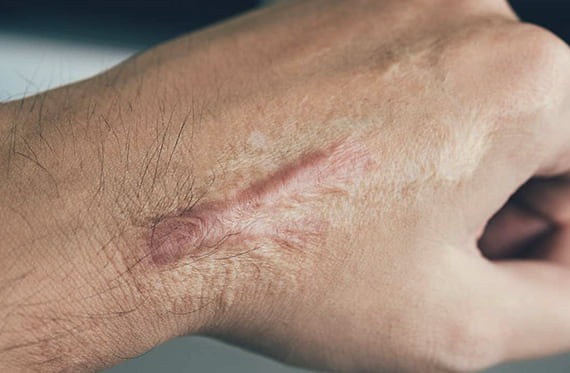
- Keloid, hypertrophic and burn scars
- Acne scars and depressed or retracted scars
- Facial scars and scars from injury or previous operations
Any time the skin is cut through full thickness or the skin is burnt, a scar will form. Unfortunately scars are permanent, in the sense that they cannot be completely erased. However they can be manipulated via means of surgical / non-surgical techniques to optimize function and appearance.
Every scar goes through what is known as a maturation process. In adults, a scar typically takes a full year to completely mature. Unless there is fundamental problem with the scar, such as a need to alter direction of scar or remove unhealthy tissue, it is generally best not to consider any scar revision. Patients need to understand that our bodies have a remarkable ability to heal, this is why we wait until the scar is fully mature and then we consider revision.
During scar maturation, one can encourage and support ideal healing with silicone sheets or gels and strictly protecting the scarred area from the sun with sunscreen.
Scar Revision Methods
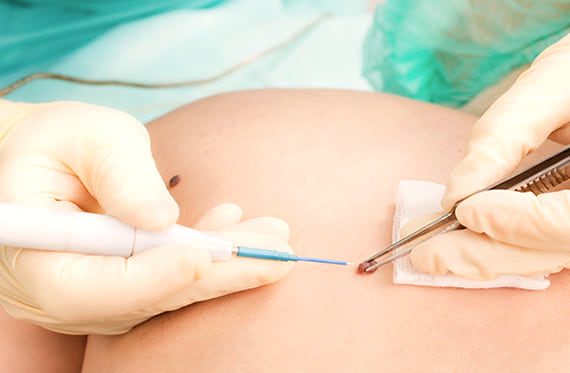
Scar revision may involve a variety of surgical and non-surgical techniques working in unison to give you the best appearance and function in the affected regions. This includes local skin rearrangement, skin grafting and laser therapies. "Surgical" scar revision generally refers to excision (cut and remove) of an existing scar followed by reconstruction of the wound. Reconstruction of wound is done by reapproximation of the tissue, possibly with a flap reconstruction or "Z-plasty"(a type of skin manipulation performed to alter direction of scar).
Scar revision surgery may be employed to improve keloid scars, acne scars, burn scars, hypertrophic scars, depressed or retracted scars, facial scars, as well as scars caused by injury or previous operations.
| Surgical | Non-Surgical |
|---|---|
| Local skin rearrangement | Laser treatment |
| Skin grafting | Steroid injections |
| Z-plasty or Flap reconstruction | Superficial scar filling |
| Scar excision | Silicon therapy |
Answered at consultation.
No. Scars are permanent in the sense that they cannot be completely erased. They can, however, be manipulated through surgical and non-surgical techniques to optimise function and appearance.
Every scar goes through a maturation process, which in adults typically takes a full year. Unless there is a fundamental problem — such as a need to alter the direction of the scar or remove unhealthy tissue — it is generally best not to consider revision until the scar is fully mature. Our bodies have a remarkable ability to heal, and we wait to let that happen.
During maturation you can encourage and support ideal healing with silicone sheets or gels, and strictly protect the scarred area from the sun with sunscreen.
Often considered together.
Considering burns / scar management?
Start with an assessment. We will talk through what you want to change, what is realistic, and which technique gets you there with the least intervention.
- Assessed by a surgeon, not a salesperson
- Procedures performed in our own certified facility
- Written plan and pricing before anything is booked