
Dental Crowns
Full coverage where a filling is not enough.
Porcelain crowns cover and strengthen a damaged tooth, restoring its appearance, shape and alignment.
- Dentistry
- Two visits
- Porcelain
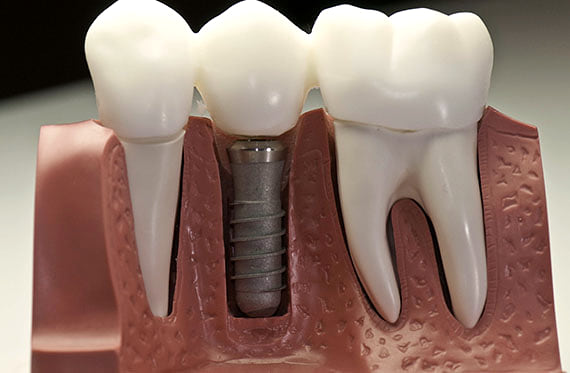
What this addresses
- Protecting a weak tooth from fracturing
- Restoring a fractured tooth
- Covering a discoloured or poorly shaped tooth
- Covering a dental implant or a tooth that has had root canal treatment
A crown is a replacement tooth made of porcelain, colloquially referred to as a cap, is used to entirely cover a damaged tooth. Crown not only strengthens a tooth, but it can drastically improve your teeth’s appearance, shape and alignment. Crowns may be used to:
- Protect a weak tooth from fracturing
- Restore a fractured tooth
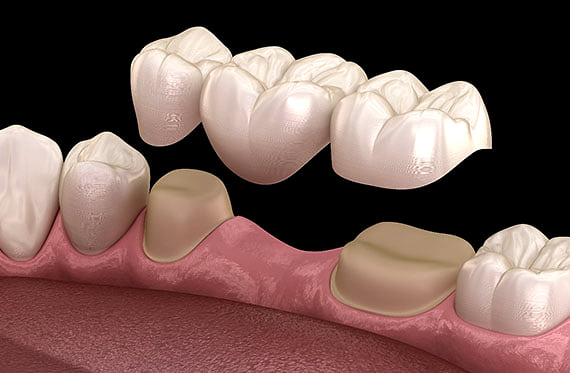
- Attach a bridge
- Cover a discolored or poorly shaped tooth
- Cover a dental implant
- Cover a tooth that has had a root canal treatment
Procedure for dental crowns
Dental crowns require two visits to the dentist, as some laboratory work is required to get your permanent crowns ready.
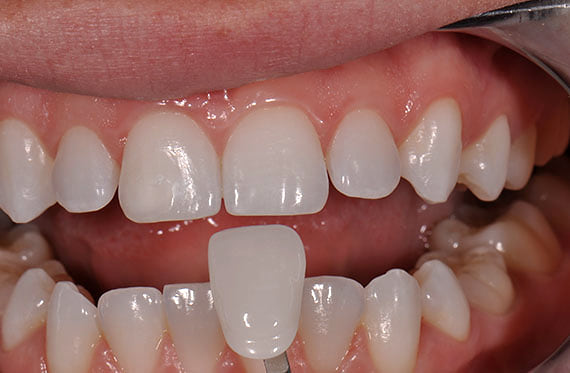
During your first visit, if you have broken or damaged teeth, they will be reshaped by filing down the enamel such that a temporary crown is allowed to fit over it. A mold of the reshaped and surrounding teeth will be taken and sent to the lab for proper fitting and color matching of the crown. A temporary crown would be placed in your mouth, until your permanent crown is ready.
In the subsequent visit, after local anaesthetic application, your permanent crown will be set with cement to ensure that it stays in place. Good oral hygiene and regular care to the crown, ensures a long lifespan for several years for the fitted crown.
Answered at consultation.
Some laboratory work is required to get your permanent crown ready. At the first visit the tooth is reshaped by filing down the enamel so a temporary crown fits, and a mould is taken and sent to the laboratory for proper fitting and colour matching. At the second visit the permanent crown is set with cement.
Good oral hygiene and regular care of the crown ensures a long lifespan of several years.
Yes. Crowns are one of the ways a bridge is anchored — a bridge is cemented into place using the teeth on either side of a gap, which are prepared with crowns.
Often considered together.
Considering crowns?
Start with an assessment. We will talk through what you want to change, what is realistic, and which technique gets you there with the least intervention.
- Assessed by a surgeon, not a salesperson
- Procedures performed in our own certified facility
- Written plan and pricing before anything is booked